

Display Brightness
The per-key OLEDs can be dimmed and brightened three different ways. Whichever you use, a manual change always wins until you re-enable automatic mode.
Manual
Section titled “Manual”- On the keyboard — the brightness preset keys step the keycap OLEDs up and down.
- In PolyKybdHost — pick a level from the tray’s Brightness submenu, or set one under Settings → Brightness.
- Command line —
polyctl brightness <0–100>.
A manual set switches automatic mode off, so the board holds exactly the level you picked.
Going back to automatic
Section titled “Going back to automatic”A manual level sticks until something turns automatic mode back on — the keyboard will
not do it by itself, not even after the sun comes up. To hand control back, choose
Brightness → Back to automatic in the tray (or run polyctl brightness --auto).
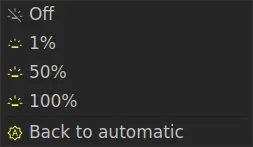
If adaptive daylight brightness is switched off in Settings, that entry reads Clear manual override instead: there is no automatic source to return to, so it just puts the keyboard back on its own stored level.
Adaptive (daylight)
Section titled “Adaptive (daylight)”PolyKybdHost can follow the sun: with location access enabled it computes the solar irradiance for your position and time of day and drifts the brightness up during the day and down in the evening. Enable it under Settings → Brightness. It refreshes roughly every ten minutes.
On-board light sensor (optional)
Section titled “On-board light sensor (optional)”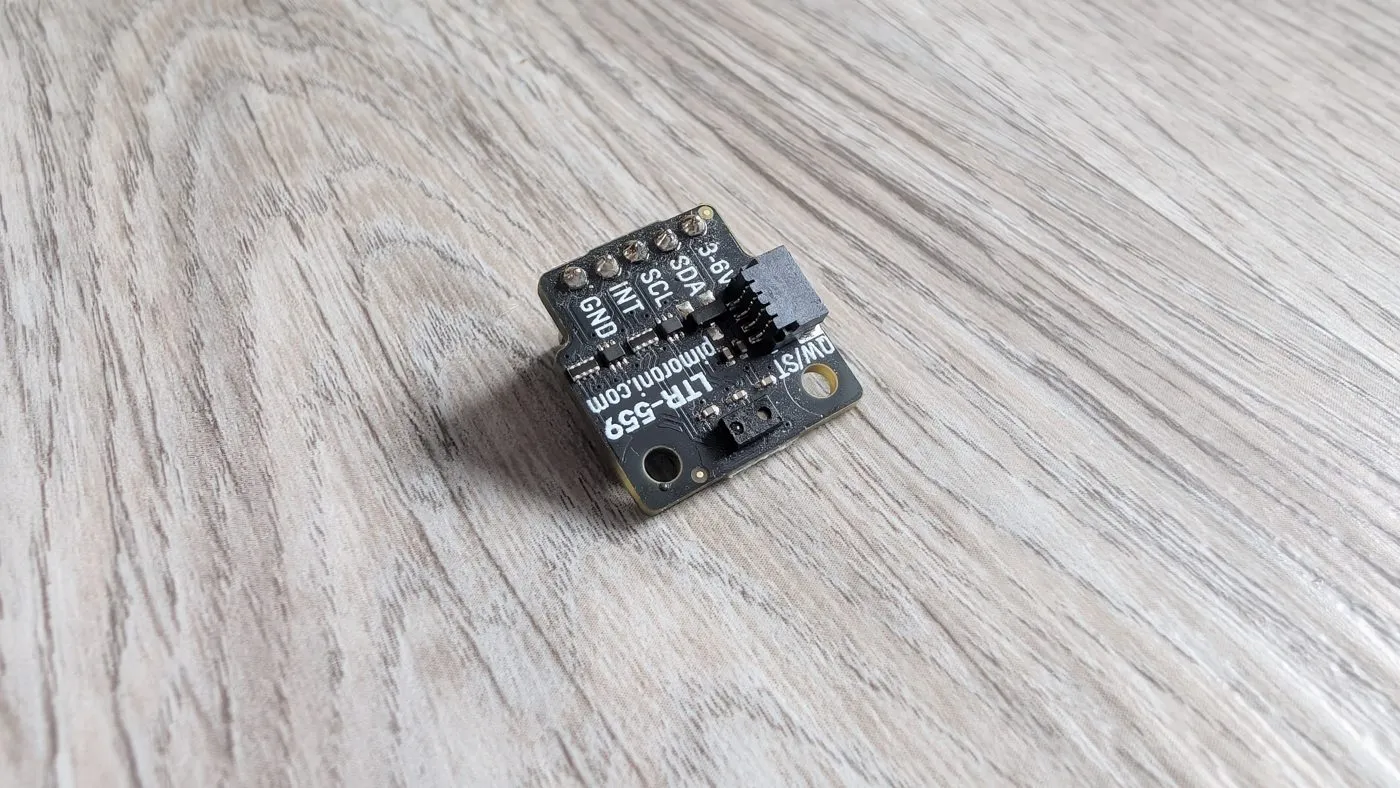
The Split72 has an expansion port for an optional ambient-light + proximity sensor (Pimoroni LTR-559). If one is fitted, the keyboard drives its own brightness from the measured light level — much faster than the host’s daylight estimate (roughly twice a second) — and overrides the host’s daylight value while automatic mode is on.
The same sensor reads proximity: reach toward the keyboard and the displays wake before you even press a key.